Jessica Campbell’s Next Chapter Is Bigger Than Seattle
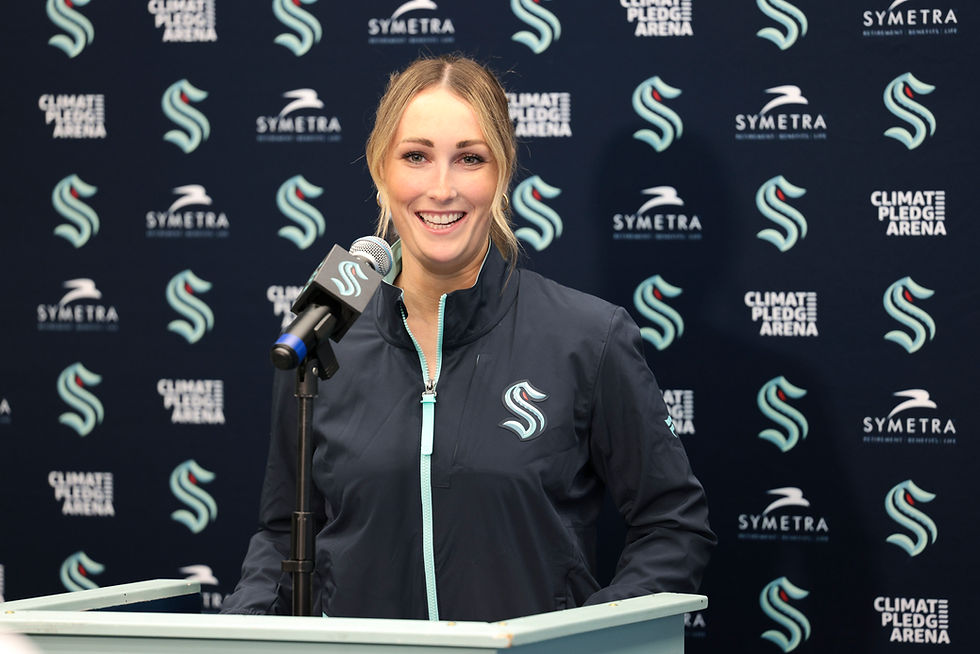
When Jessica Campbell stepped behind the bench for the Seattle Kraken in 2024, it wasn’t just another hiring; it was history.
Campbell became the first woman to serve as a full-time assistant coach in the National Hockey League, a milestone that signaled a long-overdue shift in the sport’s coaching landscape. Now, just two seasons later, her departure from Seattle this summer marks another turning point, not just for her career, but for what comes next for women in hockey.
A Short Tenure, A Lasting Impact
While her time behind the NHL bench was brief, it was anything but insignificant. Campbell’s presence alone challenged long-standing norms in a league that, until recently, had never seen a woman in a full-time coaching role.
But beyond symbolism, she delivered results.
Before joining the NHL staff, Campbell helped lead the Coachella Valley Firebirds—Seattle’s AHL affiliate—to back-to-back Calder Cup Finals appearances, proving her ability to develop players and contribute to winning systems. Her reputation as a detail-oriented coach with strong player relationships carried over to the Kraken, where she worked closely with forwards and special teams.
Why She’s Still in Demand
Campbell isn’t leaving the NHL, she’s betting on herself within it.
At just 33, she’s already built one of the most unique résumés in hockey: from coaching in Germany’s men’s leagues to working with national teams and NHL talent. That versatility is exactly why there’s growing interest in where she lands next.
Multiple teams around the league are expected to show interest, not as a publicity move, but because Campbell has proven she belongs tactically and developmentally. Her ability to bridge communication between players and systems has become one of her defining traits, something every NHL bench values.
A Fit in St. Louis?
And this is where things get interesting.
The St. Louis Blues recently moved on from their assistant coaches, creating an opening and an opportunity to rethink their bench. If the organization is serious about refreshing its identity and player development approach, Campbell should be firmly on their radar.
From a hockey standpoint, the fit makes sense. The Blues have been in a transitional phase, balancing veteran leadership with younger talent. Campbell’s background in development—especially her success in the AHL—aligns directly with what St. Louis needs right now: someone who can connect with players, refine systems, and maximize potential.
But beyond the X’s and O’s, this would be a statement hire.
Not for optics, but for direction.
Bringing in Campbell would signal that the Blues are willing to invest in proven coaching talent regardless of traditional pathways. And at this point in her career, that’s exactly how she should be evaluated, not as a groundbreaking hire, but as a smart one.
What This Means for Women in Hockey
Campbell’s exit from Seattle doesn’t close a door; instead, it widens it.
Her hiring in 2024 was a breakthrough moment. Her departure in 2026 is something different: normalization. She’s no longer “the first woman coach” in the sense of novelty, she’s a legitimate coaching candidate in a competitive hiring market.
That distinction matters.
For years, opportunities for women in men’s professional hockey were framed as exceptions. Campbell’s trajectory is helping reshape that narrative into expectation.
The Bigger Picture
Campbell leaving the Kraken might feel like the end of a chapter, but it’s more accurately a transition.
The real story isn’t that the NHL’s first female assistant coach is stepping away from one team, it’s that she now has options.
And in a league that once had none for women behind the bench, that might be the most important milestone yet.



Comments