Choosing a Path: The Reality of Youth Hockey Development
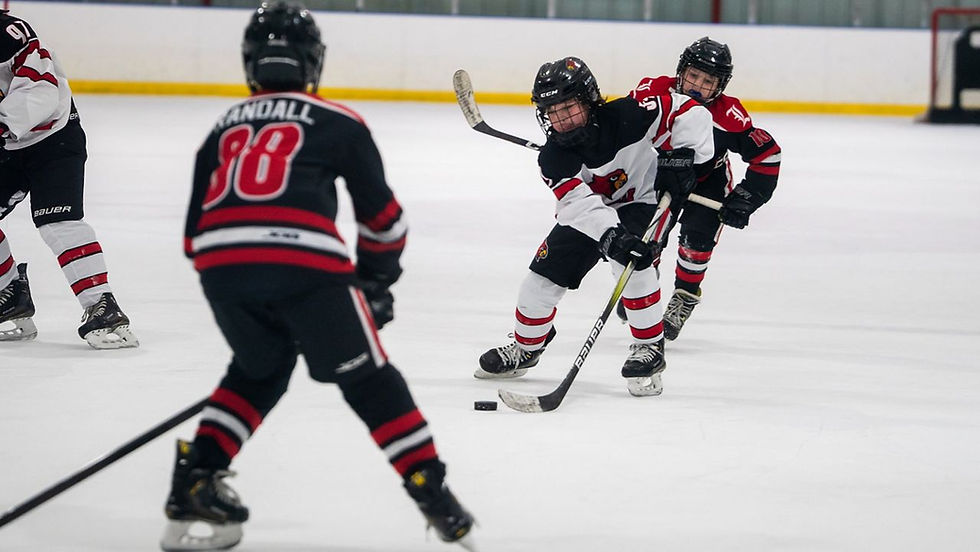
“When you’re young, you compare yourself to everyone else—I’d tell kids to stop doing that and focus on themselves. Get uncomfortable, learn the game, and don’t skip the little things… it’ll catch up to you later.” — Austin Fink, Alabama Mens Club Hockey D1
Youth Hockey in the United States offers multiple paths for players, from club programs to prep schools. Each comes with its own structure, expectations, and opportunities. But beneath the surface, those differences reveal deeper questions about the cost, accessibility, and what development in the youth level really looks like.
Through conversations with players who experienced each route, including club and high school hockey in the Midwest, and an elite prep school, clear contrasts begin to emerge.
Different Paths, Different Priorities
For many players, the path they take isn't always part of a long-term plan, it's shaped by locations, opportunity, and circumstances.
Christopher Adams, who spent five years in club hockey with the Affton Americans in St.Louis and played briefly for Auburn University, “My goals at the time were to play until I graduated and move on to club hockey in college. I never gave juniors much thought.”
Austin Fink's plan was less structured. Moving from house league to travel to high school, before continuing the sport on a college club team, “I didn’t have a plan to play hockey… I chose Alabama, found out they had a club team, and made D1.”
Meanwhile, players in prep enviornments often enter with cleaner long-term plans tied to higher levels of play. “Playing for my prep school, making them proud, and hopefully developing enough to be in NCAA hockey.”
These differing goals often shape the intensity, structure, and expectations within in each program.
The Cost Barrier
One of the most consistent themes across all levels is the cost, and it's impact on opportunity.
Fink spoke about the financial reality clearly, stating it's "Anywhere from 1k-20k."
Even at less elite levels, the price of participation can quickly rise with travel, equipment, and ice time.
Adams acknowledged the effect this has on players by saying “Yes, the cost definitely limited opportunities for some teammates that I knew.”
Fink added that cost doesn't just affect participation, but it can also shape exposure and future opportunities. “There’s a lot of kids that don’t ever get to play at AAA level because it’s so expensive… that can be limiting because the kids can’t get those looks from juniors or college teams.”
Even in areas where hockey is more available geographically, financial barriers remain a defining factor.
Development vs. Winning
Across al three pathways, the balance between development and winning shifts depending on age, level, and program structure.
At the club level, Adams saw that balance evolve over time: “Early on… we just didn’t have the pieces to compete… but once we did, winning definitely became the priority.”
Fink viewed development and winning as interconnected by saying,“By striving for one, you achieve the other… striving for those wins helped us play at a higher level we weren’t used to.”
At the prep level, the expectation appears to be both simultaneously: “Our coaches want us to develop into amazing players, but they also want us to win.”
While all programs emphasize development, the pressure to win and what that means for player growth varies significantly depending on the environment.
Pressure and Competition
Pressure is one of the clearest dividing lines between pathways.
For Adams, pressure existed, but remained manageable: “I felt some pressure, but it was never extreme.”
For Fink, the jump in competition changed everything, "From being one of the best on the team to the middle of the pack was tough… but it pushed me to be better.”
That shift, from being a top player to fighting for a spot, is often where development accelerates, but also where pressure increases.
He also described how demanding the environment can become, “It can feel like a chore or a job at the height of the season… workout, practice, recover… back-to-back trips.”
In more elite settings, internal competition becomes constant, with players competing not just against opponents, but against teammates for opportunity.
Support Systems and Structure
Support systems vary widely across programs, and in most cases are minimal.
Adams described limited structure and support outside of hockey: “There’s not much support for mental health, academics, and that kind of thing.”
Fink's experience was even more direct: "Nope, none."
This raises an important distinction: while elite programs may offer stronger development and exposure, not all pathways provide holistic support for the athletes beyond performance.
Exposure and Opportunity
When it comes to advancing in hockey, exposure plays a critical role.
Both athletes were able to reflect on showcases, allowing their programs to get eyes on the players. "We always went to showcases with scouts there so there's definitely more direct exposure," Adams stated.
Fink echoed that, "We went to a lot of showcases and the exposure there was pretty good." However, access to those opportunities often does tie back to the cost of hockey, creating a cycle where higher investment leads to greater visibility.
Accessibility: Who Gets to Play?
Perhaps the most important question is not how players develop, but who gets the chance to. Adams put it simply, "It's somewhat accessible, but obviously money is the biggest barrier."
Fink, who played in a strong hockey market, noted that access can depend heavily on location. "Illinois is one of the top hockey states... but it's pretty concentrated in the Northern areas."
Even when pathways exist, the ability to move between them is not equal. "If you have the talent, there's always a pathway... but it's much harder to develop that talent without [money]," Adams said. Fink added "If you can't play AAA, it's tougher to get looks... There are guys who breakout, but it's rare."
The result is a system where opportunity is available- but not always equally accessible.
Would They Do It Again?
Despite challenges, most players still do value their experience. "I'd 100% choose Affton again," Adams said when asked if he'd choose his team again. Fink reflected similarly, though with some curiosity about other paths, "I don't think I would've changed anything... I would've given AAA a shot for one year."
Even in a system with some flaws, challenges, and pressure, the impact of the sport remains the same. Meaningful.
Final Thoughts
Youth hockey offers multiple paths, each with its own strengths. Club programs provide exposure, high school hockey offers balance and accessibility, and prep schools deliver elite development environments.
But across all levels, one theme remains constant. The cost of the game shapes the experience.
While talent and work ethic still matter, access to coaching, competition, and exposure often determines how far a player can go.
And until those barriars are addressed, the question isn't just "Which path is the best?" it's "Who gets the chance to choose one at all."
All of the profits from this blog will go to USA Hockeys Youth Hockey Development Foundation and Devils Youth Foundation!



Comments